Designing Booking Infrastructure for the Independent Beauty/Wellness Pro
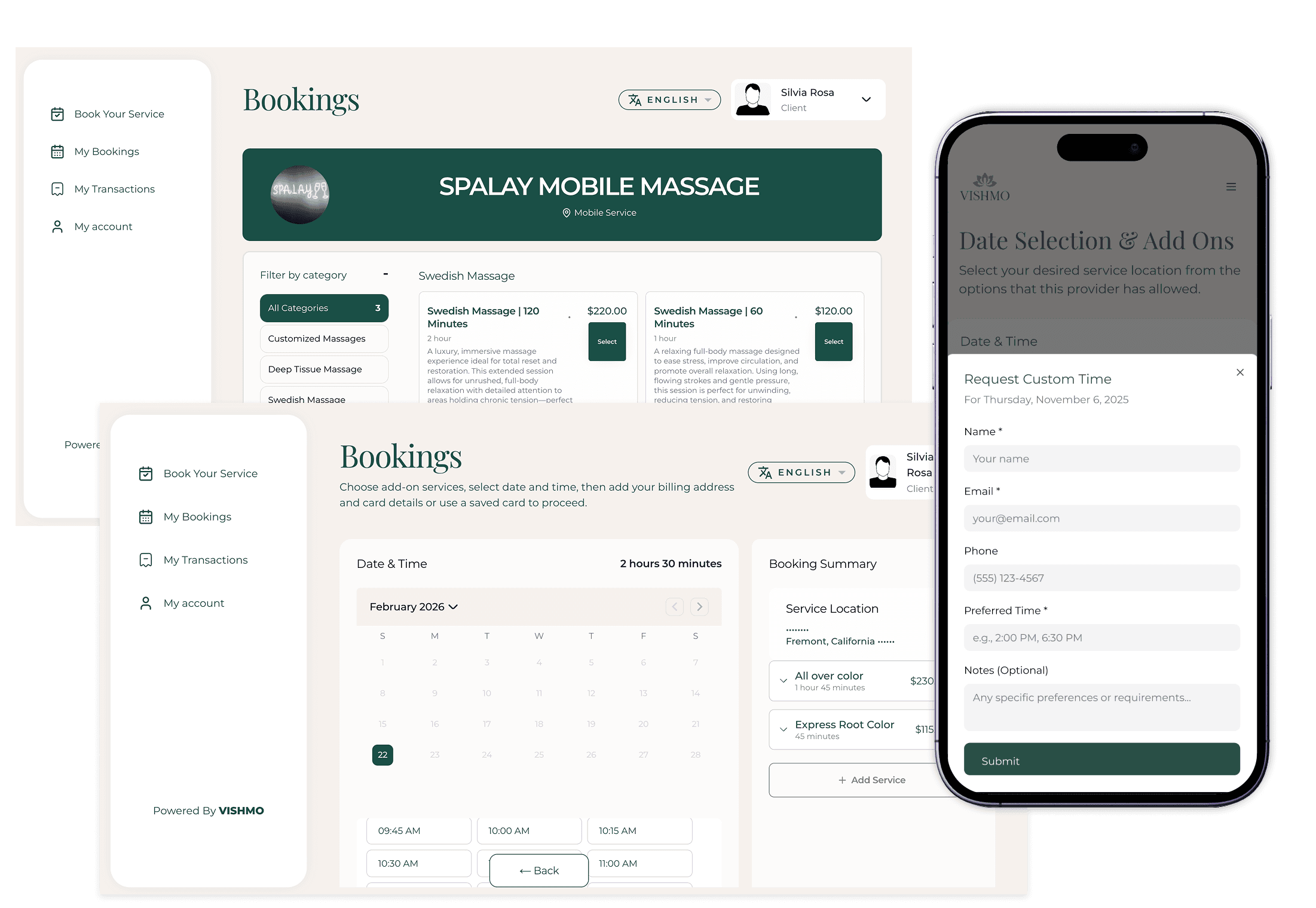
COMPLETED:
SKILLS:
Product Strategy
Experience Design
Quick Iteration
ROLE:
Solo Product Designer for Vishmo
IMPACT
defined 2 new platform differentiators that users cited when switching from competitors
THE "MESS"
Existing booking softwares are designed for salons—representing professionals who work alone requires something new
To compete with the salon-grade, feature-rich platforms, Vishmo needed infrastructure that resonated with the solo professional working out of a kit bag or a rented suite: flexible on payment, flexible on location, and presentable enough to proudly share a booking link on Instagram.
Beauty, wellness, and fitness industries vary in client expectations and booking norms. We needed to speak the "language" of these professionals and clients while communicating a brand new product: a marketplace to find these professionals.
To Do:
Create a shareable public-facing profile that bridges marketplace discovery and direct booking
Design the provider profile to let pros present their work, services, and business identity
Build a booking flow that accommodates provider constraints (location, payment) without dead ends for clients
THE SOLUTION
A New Booking Flow for the Solo Pro
I restructured the booking flow to give providers greater control over how their business operates while preserving consistency and expectations across the marketplace.
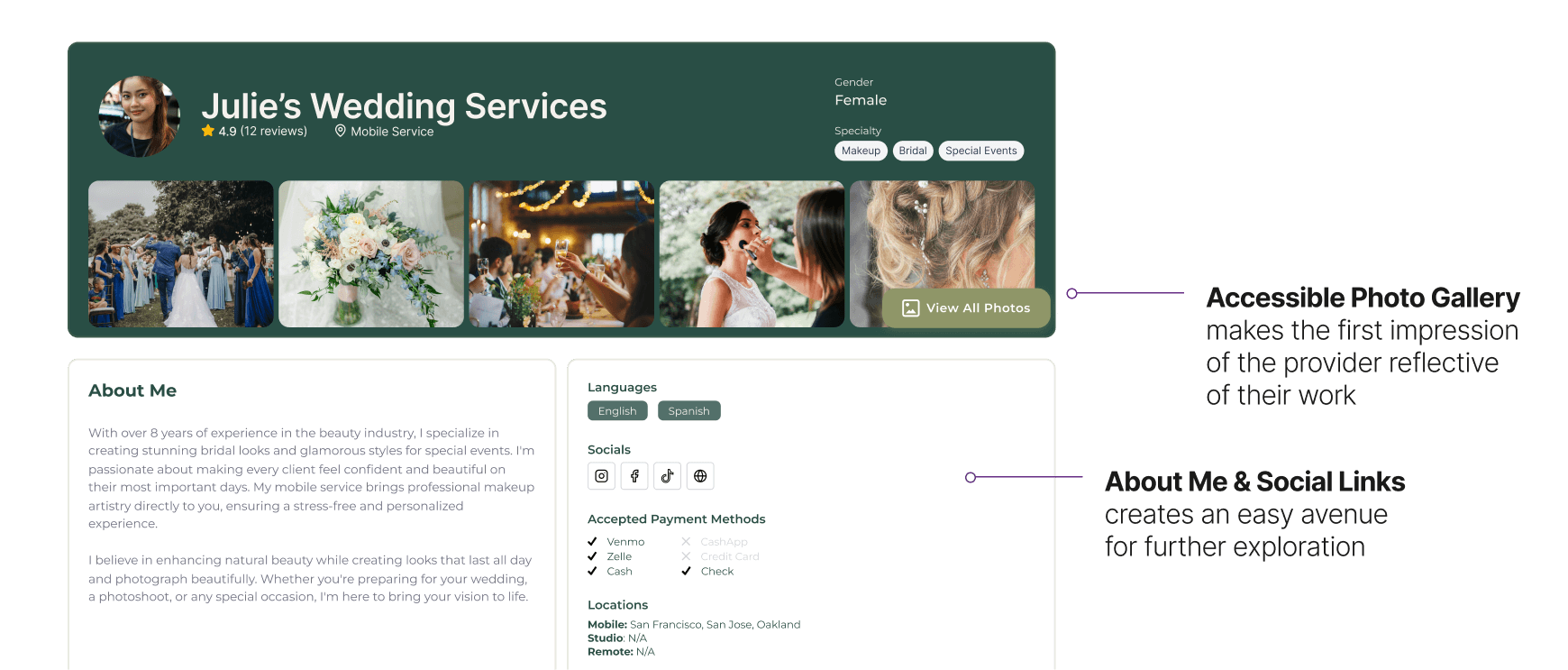
Surfacing Provider Work & Description Early in Public Profiles
Because the relationship between clients and professionals are often personal, professionals in the beauty industry can be evaluated based on both personality and visual evidence of their work.
Tradeoff: These features buried reviews, which was suitable for the startup's low engagement but also resulted in less trust. Also, services required an additional scroll to get to, meaning this designed prioritized exploration over a more efficient booking process.
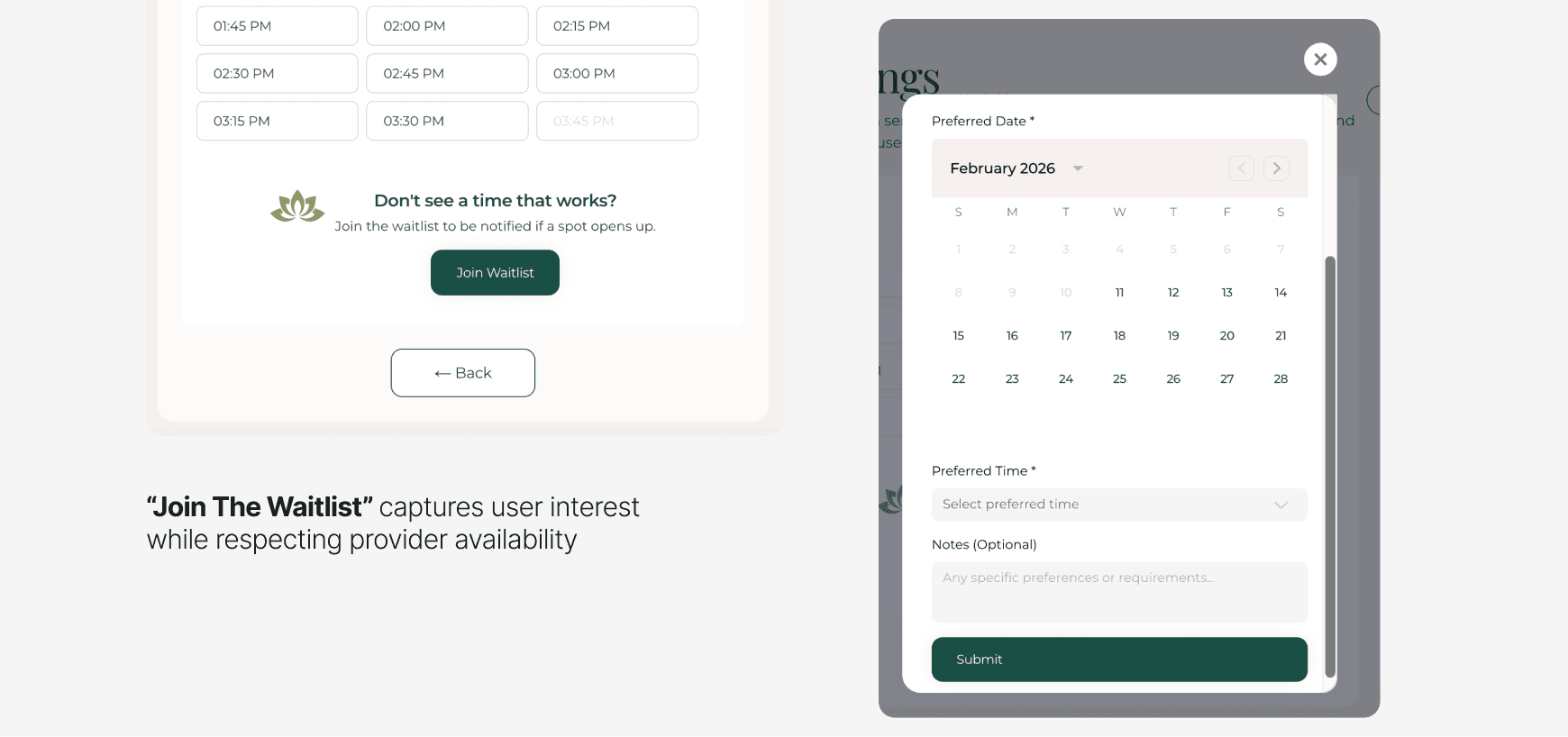
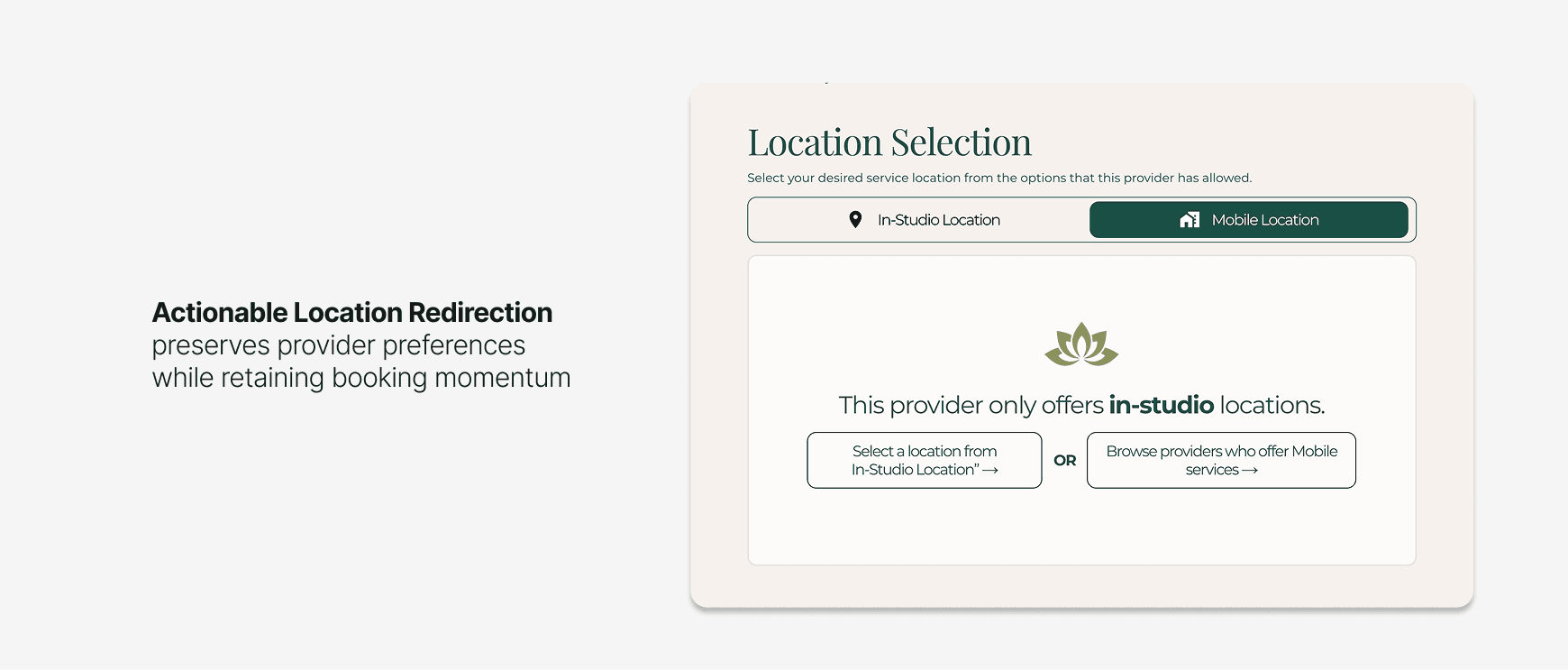
Protecting the Booking Flow When Providers Have Different Rules
Details like location context, availability, and language flexibility implicitly communicated the variety of options & the level of customization a client could expect for meeting a provider that is right for them.
Tradeoff: Showing variability relied on there being enough providers from diverse skillsets, which we did not have in the beginning. This was a decision that took the risk of anticipating scale before we had it.
IMPACT
Providers Switched for Two Reasons, and Both Were About Flexibility
Provider feedback during onboarding revealed a clear differentiator: existing users of GlossGenius and Vagaro appreciated Vishmo's flexibility in payment methods and service-specific availability.
DELIBERATE UN-DESIGNS
Balancing Opportunities for Increased Revenue with Ease of Booking for Clients
Supporting independent pros meant both increasing their opportunities for selling services and bringing them clients by making the booking process as seamless as possible. These were some cases where the two priorities collided.
Un-Designing Add-On Emphasis
Early designs included a dedicated upsell screen prompting clients to add services before booking, which introduced friction at the critical conversion moment.
Although this would maximize transaction value, I chose to prioritize calendar availability to streamline booking completion to support booking reliability for the early-stage marketplace.
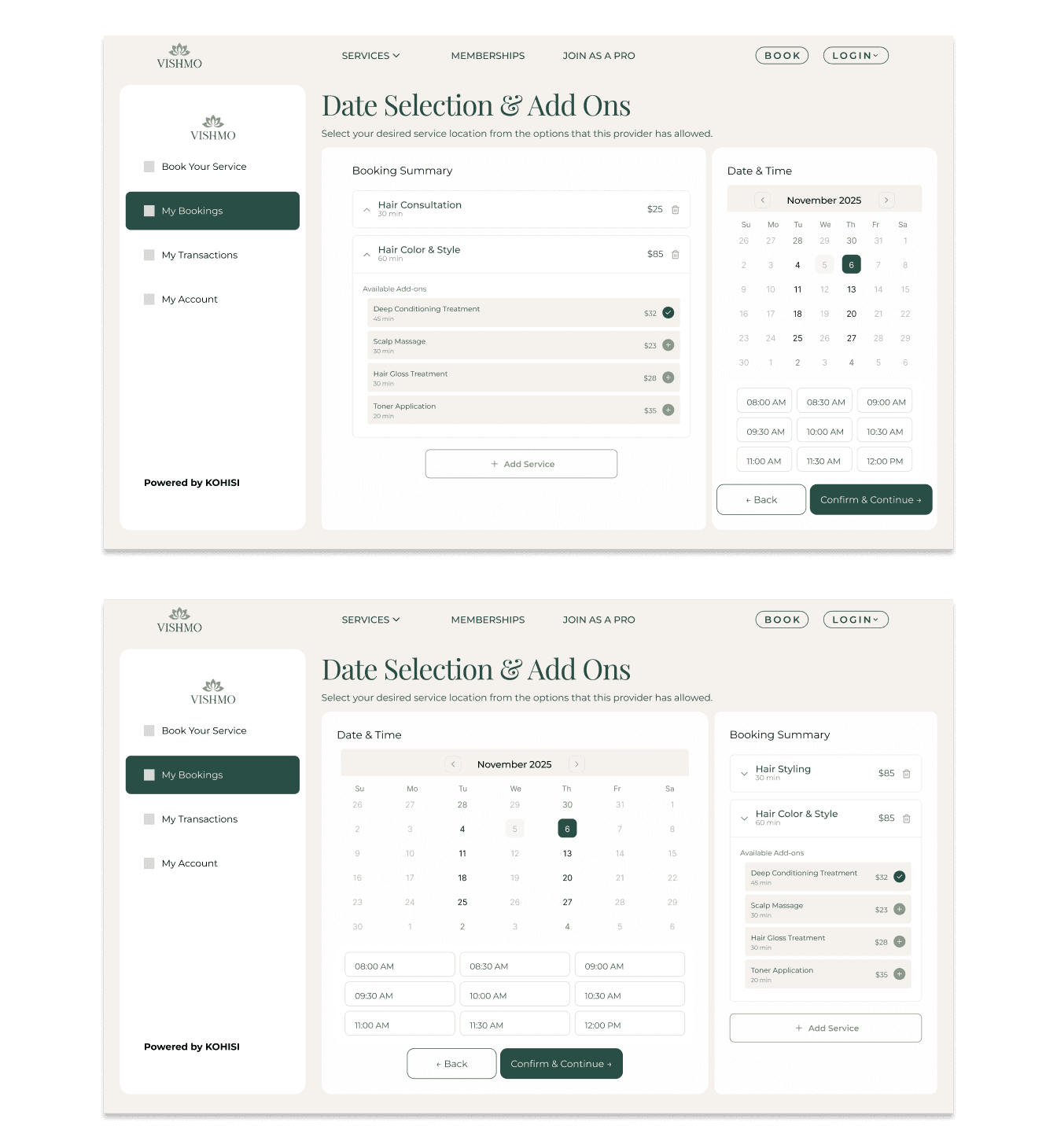
Top: a variation of the pre-existing screen, which preserved location but updated the UI for readability; Bottom: the newer layout that became the final design.
Being able to book without creating an account would reduce booking friction. However, beauty and wellness services have a high no-show risk that becomes more enabled without account accountability.
For a subscription-based platform where providers pay for booking infrastructure, protecting them from no-shows outweighed reducing client friction, and we kept account creation as a required step before booking confirmation.
Requiring clients to enter payment information reduces no-shows and guarantees provider income. However, beauty and wellness professionals often have relationships with repeat clients and prefer flexibility in how they collect payment, such as cash, Venmo, or invoicing after service completion.
So we allowed providers to control their own payment preferences, including the option to accept "pay later" or cash-only bookings.
DESIGN EVOLUTION
Design Decisions
These design decisions evolved significantly from initial concepts based on provider feedback.
Moving between Search and Profiles
My early designs for public profiles had a "back to search" button so that a client skimming profiles quickly can return to search after a quick glance. When implemented, using this button to return to search cleared filtering customizations, forcing users to re-input their search criteria and filters to find new providers. The constraint here was a technical storage issue, as our site was not using cookies to locally store data.
To work around this, we decided to open profiles in new tabs so that the original search page with the respective search criteria would be preserved.
DEFERRED FOR V2 (STARTUP LIMITATIONS)
Additional Screen for Incentivizing Add-Ons
We explored a dedicated screen after service selection that would showcase relevant add-ons and package deals, similar to e-commerce cart optimization.
This was deferred due to concerns about adding friction to an already multi-step flow. Early-stage marketplaces benefit more from completed bookings than maximized cart value. Once baseline conversion was proven reliable, this could be revisited as an optional provider setting rather than a forced platform behavior.
Progress Bar to Track Status in Booking
A progress indicator showing booking flow stages (Service → Location → Time → Payment) would have reduced uncertainty and helped clients understand how close they were to completion.
However, implementing this required additional engineering effort to dynamically track flow state across varying provider configurations. Given the timeline, we prioritized functional completion over progress visualization and planned to revisit this in V2 once booking patterns became clearer.
Shortcut Booking Pathway for Existing/Repeated Clients
Because clients are often loyal to their service providers in the beauty/wellness industry, creating an easier pathway for existing clients to rebook services according to their preferences would drastically reduce friction in rebookings and would grant providers some stability in their schedules. We decided to defer this design to a future update because we're still in the early stages of onboarding providers and do not yet have many clients who are using the platform.
REFLECTION
Balancing Provider Variability with Reliable Booking
My biggest takeaway was understanding that having a slightly better product is not often enough for users to switch from a different one. This led us to prioritize more efforts to build a platform that actually supports their business. Allowing payment flexibility and provider-defined availability both accommodating edge cases and (more importantly) signaled that Vishmo understood how beauty professionals actually operate.
Next time, I'd validate feature priorities directly with providers before building, rather than relying on competitive analysis. The constraint of limited timeline forced us to move quickly, which taught me how to balance speed with strategic risk.